
The global smartphone industry is one of the most sophisticated commercial ecosystems in the modern economy, and at its very core stands Apple’s iPhone. Few products in history have generated such sustained demand, global loyalty, and resale value. The iphone trade in market, particularly between China and the United States, has evolved into a highly strategic commercial channel shaped by manufacturing dominance, logistics intelligence, consumer upgrade cycles, and regulatory oversight. Understanding this trade requires not only an examination of Apple’s production ecosystem in China, but also a deeper look into how refurbished, traded-in, and redistributed iPhones flow back into the U.S. consumer market.
China has long served as the manufacturing epicenter for Apple devices, benefiting from an advanced electronics supply chain, skilled labor pools, and large-scale production efficiency. As U.S. consumers continuously upgrade to newer models, the trade in iphone process has become a circular economy mechanism that feeds older devices back into secondary markets, refurbishment pipelines, and cross-border trade channels. This dynamic has transformed iPhones into globally traded assets rather than disposable consumer electronics.
Evolution of the iPhone Trade-In Economy
The rise of the apple iphone trade in ecosystem is closely linked to Apple’s own sustainability and upgrade strategies. Trade-in programs encourage consumers to exchange older models for store credit or carrier discounts, extending the lifecycle of devices while reducing electronic waste. In the United States, carrier-driven trade-ins have further accelerated this trend by making high-end iPhones accessible through installment plans and promotional exchanges.
China plays a critical role after the trade-in stage. Many devices collected through U.S. carrier programs are exported for testing, grading, and refurbishment in specialized Chinese facilities. The iphone trade in value of a device is often determined by its condition, storage capacity, model year, and global demand, with Chinese refurbishing hubs setting international benchmarks for resale pricing.
What makes this system particularly resilient is its adaptability. Whether it is the iphone trade in iphone upgrade cycle driven by Apple’s annual releases or demand surges for specific models in emerging markets, China’s refurbishment and logistics infrastructure allows rapid redistribution across borders.
Market Trends Driving China–USA iPhone Trade
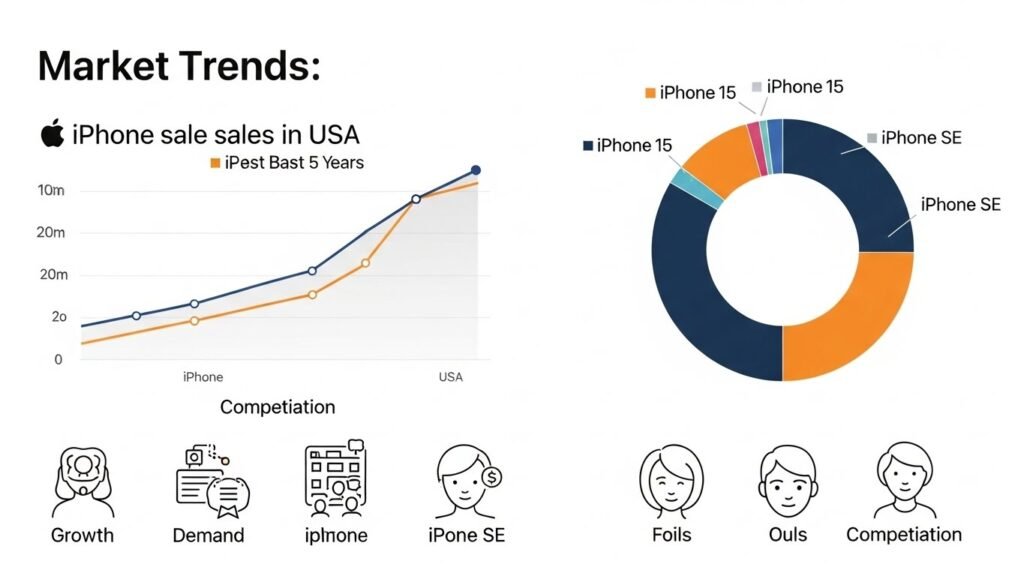
Several macroeconomic and industry-specific trends continue to shape the China–USA iPhone trade. One of the most influential factors is consumer behavior in the U.S., where frequent upgrades have normalized annual or biannual device replacement. Programs such as verizon iphone trade in and att iphone trade in have normalized the idea that older devices still carry substantial economic value.
Another key driver is the resale demand for premium models. Devices like the iPhone 13 Pro Max remain highly desirable due to their performance longevity, making the iphone 13 pro max trade in value particularly strong in international secondary markets. These devices are often refurbished in China and resold in regions where flagship pricing would otherwise be prohibitive.
Additionally, trade policy and tariff considerations influence how devices are moved between borders. Companies engaged in the iPhone trade must remain agile, adjusting shipping routes, valuation strategies, and inventory timing to respond to evolving U.S.–China trade regulations.
China’s Role in the iPhone Supply Chain
China’s importance extends beyond assembly lines. It is the nerve center of testing, refurbishment, and redistribution for traded-in iPhones. Facilities equipped with advanced diagnostics can process millions of devices annually, restoring them to near-new condition. These operations allow U.S. carriers and retailers to recover significant value from trade-in programs while keeping costs competitive.
The physical movement of devices relies heavily on efficient logistics coordination. Shipping from china to usa remains a foundational component of this ecosystem, especially for refurbished devices returning to American resale platforms or enterprise buyers. Companies that master air freight from china to usa can drastically reduce turnaround times, which is essential in a market where device value depreciates quickly after new model launches.
In many cases, businesses partner with a shipping agent china to usa to navigate customs compliance, documentation, and cargo optimization. Reliable logistics partners ensure that refurbished iPhones reach U.S. warehouses safely, legally, and cost-effectively.
Trade-In Programs and U.S. Consumer Demand
U.S. consumers have grown increasingly strategic about device upgrades. Programs like apple trade in iphone allow users to offset the cost of new devices while contributing to sustainability goals. Carrier-based programs further sweeten the deal by bundling trade-ins with contract incentives, making premium upgrades more accessible.
This behavior has a ripple effect across international markets. Devices collected through these programs rarely remain idle. Instead, they enter a global redistribution network, often passing through China for refurbishment before being resold domestically or abroad. This constant circulation keeps the iphone trade in market active and profitable.
The presence of publicly traded companies in this ecosystem underscores its financial significance. Many logistics providers, refurbishers, and electronics distributors involved in the iPhone trade are listed entities, accountable to shareholders and driven by quarterly performance metrics. Historically, the first publicly traded company in electronics refurbishment helped legitimize this secondary market, transforming what was once informal resale into a regulated, scalable industry.
Logistics, Shipping, and Freight Intelligence
Behind every successful iPhone trade operation lies a sophisticated logistics framework. Moving high-value electronics across borders requires precision, security, and compliance expertise. Companies involved in this trade often rely on freight forwarding companies in china to consolidate shipments, optimize routes, and manage customs clearance efficiently.
Cost optimization remains a constant priority. Identifying the cheapest shipping from china to usa without compromising safety or speed can significantly improve margins, especially when handling large volumes of refurbished devices. Strategic use of best freight forwarders china to usa ensures consistency during peak seasons, such as post-iPhone launch trade-in surges.
The U.S. side of the equation is equally important. A reliable shipping company in usa ensures last-mile delivery, warehouse integration, and reverse logistics for returns or warranty claims. When these systems operate seamlessly, the entire trade cycle—from consumer trade-in to refurbished resale—becomes faster and more profitable.
Dropshipping and Secondary Market Expansion
Beyond traditional retail channels, refurbished iPhones have found a strong foothold in e-commerce and wholesale distribution. Many sellers now work with dropshipping suppliers usa, allowing them to sell refurbished devices without holding inventory. These models depend heavily on real-time logistics data and cross-border fulfillment reliability.
China-based sourcing networks play a crucial role in supporting this structure. Access to unique source products and services allows sellers to differentiate offerings, whether through graded device conditions, bundled accessories, or warranty enhancements. Efficient coordination between sourcing, refurbishment, and logistics ensures that devices meet U.S. consumer expectations.
Strategic Sourcing and Adam Sourcing’s Role
Navigating the complexities of the iPhone trade between China and the U.S. requires more than transactional logistics—it demands strategic sourcing intelligence. This is where companies like Adam Sourcing become relevant. By aligning manufacturers, refurbishers, and logistics partners, Adam Sourcing helps businesses streamline procurement while maintaining compliance and quality assurance across borders.
Through its expertise in dropshipping china to usa, shipping agent china to usa, and air freight from china to usa, Adam Sourcing supports businesses seeking efficient, scalable trade solutions. Its role extends beyond transportation, encompassing supplier verification, cost optimization, and risk mitigation in volatile trade environments.
What differentiates Adam Sourcing is its integrated approach. Rather than treating logistics as a standalone function, the company embeds shipping intelligence into broader supply chain strategies. This allows clients to respond swiftly to demand fluctuations, regulatory changes, and seasonal trade-in spikes without operational disruption.
Risk Management and Compliance Considerations
Despite its profitability, the iPhone trade is not without risk. Regulatory compliance, intellectual property protection, and data security are paramount when handling used devices. Companies must ensure that all traded-in iPhones undergo certified data wiping procedures before resale or export, protecting consumer privacy and complying with U.S. and international regulations.
Trade documentation accuracy is equally critical. Partnering with a knowledgeable shipping agent china to usa minimizes customs delays and reduces the risk of penalties or shipment holds. For businesses scaling operations, investing in compliance expertise is not optional—it is foundational.
Future Outlook of the iPhone Trade
The future of the iphone trade in market looks robust. As Apple continues to emphasize sustainability and circular economy principles, trade-in programs are expected to expand further. Technological advancements in refurbishment will extend device lifespans, increasing resale value and global demand.
China will likely retain its central role, not only due to manufacturing expertise but also because of its unmatched refurbishment infrastructure. At the same time, U.S. market demand for affordable premium devices will continue to drive imports, reinforcing the importance of efficient shipping from china to usa strategies.
Companies that succeed in this environment will be those that combine market insight, logistics excellence, and sourcing intelligence. Strategic partners like Adam Sourcing, when used judiciously, can provide a competitive edge by simplifying complexity and enhancing operational resilience.
Conclusion
The iPhone trade between China and the United States is far more than a transactional exchange of devices. It is a sophisticated, multi-layered ecosystem shaped by consumer behavior, global logistics, corporate strategy, and technological innovation. From the initial trade in iphone at a U.S. carrier store to refurbishment in China and eventual resale, every step reflects the interconnected nature of modern global commerce.
As trade-in values rise, sustainability becomes a priority, and logistics networks grow more intelligent, the iPhone’s journey across borders will remain a defining example of how high-value consumer electronics move through the global economy. Businesses that understand this system holistically—and invest in reliable sourcing and shipping frameworks—will be best positioned to thrive in this evolving market.