
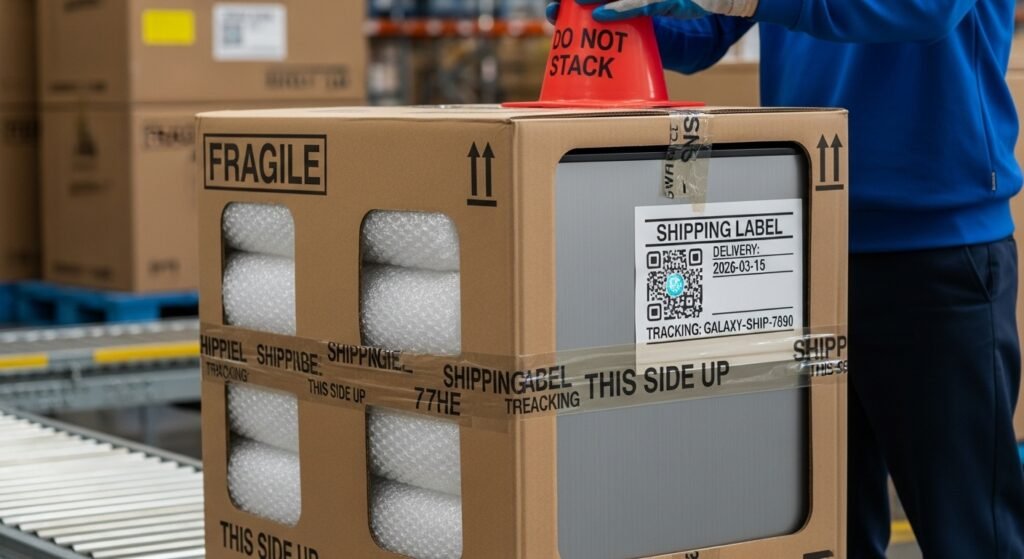
Shipping a mini fridge may seem simple at first glance, but anyone who has dealt with appliance logistics knows that it requires far more than wrapping it in cardboard and calling a courier. In 2026, with rising freight costs, stricter carrier regulations, and a growing demand for compact refrigeration units, fridge shipping has become a topic that demands precision, planning, and professional insight. Whether you are moving homes, selling appliances online, importing products, or managing international supply chains, understanding how to ship a mini fridge correctly can save you from costly damage, delays, and disputes.
Mini fridges are deceptively complex appliances. Inside their compact frames lie compressors, refrigerant lines, insulation layers, and electronic components that are highly sensitive to shock, vibration, and improper positioning. This is why shipping a fridge, even a small one, is fundamentally different from shipping ordinary household goods. In this guide, we will explore everything you need to know in 2026 about safe packaging, realistic costs, freight options, shipping scales, and expert tips that ensure your mini fridge arrives intact and functional.
Understanding the Nature of Mini Fridge Shipping
Before diving into logistics, it is important to understand why fridge shipping requires specialized handling. A mini fridge may weigh anywhere from 40 to 80 pounds, but its internal weight distribution is uneven due to the compressor at the back. This makes it prone to tipping, internal strain, and oil displacement if shipped incorrectly. When people ask how to ship a mini fridge safely, the real answer lies in respecting these mechanical realities rather than focusing solely on exterior packaging.
Another overlooked factor is refrigerant stabilization. Most manufacturers recommend that a fridge remain upright for a specific period after shipping before being powered on. This allows compressor oil to settle properly, preventing long-term damage. Any shipping method that ignores this principle risks shortening the appliance’s lifespan.
Preparing a Mini Fridge for Shipping the Right Way
Proper preparation is the foundation of damage-free shipping. The first step is to unplug the unit at least 24 hours before transport. This allows the freezer compartment to defrost completely, preventing moisture buildup that could damage internal wiring or insulation during transit. If you are shipping a mini fridge with freezer free shipping offers from retailers, they typically handle this step at the warehouse level, but private shippers must manage it themselves.
Once defrosted, the interior should be cleaned and dried thoroughly. Shelves, drawers, and removable trays should be taken out, wrapped individually, and labeled. Leaving loose components inside the fridge during shipping a fridge is one of the most common causes of internal cracking and cosmetic damage.
The power cord should be coiled carefully and secured with tape or zip ties. Never allow it to dangle freely, as it can snag or tear during loading and unloading. The door must be closed firmly and secured using stretch wrap or moving straps. Avoid using adhesive tape directly on the surface, as it can leave residue or damage the finish.
Packaging Materials That Actually Protect Mini Fridges
When it comes to packaging, cutting corners is the fastest way to incur losses. A mini fridge should ideally be placed back into its original packaging, complete with molded foam inserts. However, in most real-world scenarios, original boxes are unavailable. In such cases, custom packaging becomes essential.
Heavy-duty cardboard cartons rated for appliances should be used, along with rigid foam panels to absorb shock. Bubble wrap alone is insufficient for fridge shipping, as it compresses under weight and provides minimal impact resistance. Corner protectors are especially important, as corners are the most vulnerable points during drops or stacking.
Palletizing the mini fridge is strongly recommended for long-distance or freight transport. Once secured on a pallet, the fridge should be shrink-wrapped tightly and banded for stability. This not only reduces the risk of tipping but also makes handling safer when forklifts are involved. Many carriers refuse to insure appliances that are not palletized, making this step financially prudent as well.
Measuring Weight and Dimensions Using Shipping Scales
Accurate measurements are critical for cost estimation and carrier compliance. Using reliable shipping scales ensures that you are not underreporting weight, which can lead to surcharges or shipment refusal. In 2026, dimensional weight pricing has become standard practice, meaning carriers charge based on volume as well as actual weight.
Measure the packaged fridge’s height, width, and depth after palletization. Even a few extra inches can significantly impact shipping costs, especially for air freight. Understanding how carriers calculate dimensional weight helps you choose packaging that balances protection with cost efficiency.
Choosing the Best Shipping Method for Mini Fridges
The best shipping method depends on distance, urgency, and budget. For domestic shipments within the United States, ground freight is often the most economical option. This is particularly true when working with a reputable shipping company in usa that specializes in appliance transport. Ground freight offers stable transit conditions and lower costs compared to air shipping.
Air freight, while faster, is significantly more expensive and should be reserved for urgent or high-value shipments. When considering air freight from china to usa, proper documentation and compliance with airline regulations regarding refrigerants are essential. Some airlines impose restrictions on appliances containing certain gases, making pre-clearance critical.
For international shipments, especially involving shipping china to usa, ocean freight remains the most cost-effective solution for bulk or commercial quantities. However, transit times are longer, and packaging must be robust enough to withstand extended handling and environmental exposure.
Cost Breakdown: What Does It Really Cost to Ship a Mini Fridge?
Shipping costs vary widely based on distance, method, and service level. Domestic fridge shipping within the same state may cost between $80 and $150, while cross-country transport can range from $200 to $400. International shipping introduces additional variables such as customs duties, port fees, and insurance.
For businesses importing mini fridges, finding the cheapest shipping from china to usa often involves consolidating shipments and working with experienced freight forwarders. Hidden costs frequently arise from improper documentation or underestimated dimensional weight, emphasizing the importance of professional logistics planning.
Retailers offering mini fridge free shipping typically absorb these costs through bulk shipping contracts and optimized supply chains. Consumers should recognize that “free shipping” does not mean low shipping costs—it simply means the cost has been built into the product price.
Special Considerations for Cruise Ships and Travel Use
A surprisingly common question is: are there mini fridges on carnival cruise ships? While many cruise cabins do include small refrigerators, policies vary by ship and cabin class. Travelers who require specialized refrigeration for medical needs may be allowed to bring their own unit, but this requires advance approval and adherence to strict shipping and safety guidelines.
Shipping a mini fridge to a port or cruise terminal involves additional coordination, as ports have security protocols that differ significantly from residential delivery. This makes advance planning and carrier communication especially important.
The Role of Professional Sourcing and Logistics Partners
For businesses involved in global appliance trade, managing logistics internally can quickly become overwhelming. This is where professional sourcing and freight partners provide immense value. Companies like Adam Sourcing play a critical role in coordinating manufacturing, packaging, compliance, and transportation under a unified logistics strategy. By aligning suppliers with vetted carriers and ensuring that appliances meet destination regulations, Adam Sourcing helps businesses reduce damage rates and avoid costly delays.
In the context of shipping from china to usa, working with a knowledgeable shipping agent china to usa ensures smoother customs clearance and optimized routing. These agents act as intermediaries between manufacturers, carriers, and importers, reducing communication gaps that often lead to errors.
Freight Forwarding and Dropshipping in the Appliance Market
The growth of e-commerce has made dropshipping an increasingly popular model for selling mini fridges. Partnering with reliable dropshipping suppliers usa allows sellers to offer faster delivery times and simplified returns. For startups and small businesses, identifying free dropshipping suppliers usa can significantly lower entry barriers, though due diligence is essential to ensure product quality and shipping reliability.
On the international front, freight forwarding companies in china play a pivotal role in consolidating shipments, negotiating carrier rates, and managing export documentation. The best freight forwarders china to usa distinguish themselves through transparency, real-time tracking, and proactive problem-solving.
Adam Sourcing, when integrated into this ecosystem, offers a streamlined approach that connects sourcing with logistics, reducing the friction that often exists between procurement and shipping operations. Their involvement allows businesses to focus on sales and marketing while logistics complexities are handled professionally.
Shipping to and From China: Strategic Insights for 2026
Global trade dynamics continue to evolve, and understanding the best way to ship to china or from China requires up-to-date knowledge of trade policies, tariffs, and carrier trends. In 2026, sustainability considerations and carbon surcharges have begun to influence freight pricing, making route optimization more important than ever.
Businesses seeking unique source products and services often rely on hybrid shipping strategies that combine sea and air freight to balance cost and speed. This approach is particularly effective for high-demand items like mini fridges during peak seasons.
Insurance, Risk Management, and Claims Prevention
No matter how well you package a mini fridge, risk cannot be eliminated entirely. This makes shipping insurance a critical component of fridge shipping. Insurance should cover not only the declared value of the appliance but also potential loss due to delays or mishandling.
Proper documentation, including photographs of packaging and condition before shipment, strengthens your position in the event of a claim. Many disputes arise not from damage itself but from insufficient proof of proper packaging.
Final Tips for Damage-Free Mini Fridge Shipping in 2026
Successful shipping is the result of informed decisions rather than guesswork. Always choose carriers with appliance-handling experience, invest in proper packaging, and use accurate shipping scales to avoid surprises. Understand that shipping a fridge is a mechanical challenge as much as a logistical one, requiring respect for the appliance’s internal structure.
For businesses, aligning with experienced partners such as Adam Sourcing and vetted logistics providers ensures that every step—from factory floor to final delivery—is executed with precision. Whether you are shipping a single unit or managing a global supply chain, the principles remain the same: preparation, protection, and professional coordination.
Frequently Asked Questions (FAQs)
1. How do I ship a mini fridge without damaging it?
To ship a mini fridge safely, unplug it at least 24 hours in advance, defrost it completely, secure all removable parts, and use heavy-duty packaging with foam protection. Palletizing the unit significantly reduces the risk of tipping and internal damage during fridge shipping.
2. How much does it cost to ship a mini fridge in 2026?
The cost of shipping a mini fridge depends on distance, weight, and shipping method. Domestic shipping typically ranges from $80 to $400, while international shipping from China to the USA may cost more depending on freight type, customs fees, and insurance.
3. Can I ship a mini fridge with the freezer inside?
Yes, you can ship a mini fridge with freezer, but it must be fully defrosted and dried before shipping. Moisture left inside can damage internal components during transit.
4. Is free shipping available for mini fridges?
Many retailers offer mini fridge free shipping or mini fridge with freezer free shipping by including logistics costs in the product price. For private or international shipments, free shipping is uncommon unless arranged through bulk freight or supplier agreements.
5. What is the best way to ship a mini fridge internationally?
The safest international option is palletized ocean freight for cost efficiency or air freight for speed. Working with experienced freight forwarders ensures compliance with regulations, proper documentation, and reduced transit risk.
6. Do I need shipping insurance for a mini fridge?
Yes, shipping insurance is strongly recommended. Mini fridges contain sensitive mechanical components, and insurance protects you from financial loss due to damage, delays, or mishandling.
7. Are there mini fridges on Carnival cruise ships?
Many Carnival cruise ships provide mini fridges in select cabins, but availability varies. Passengers requiring personal refrigeration should check with the cruise line in advance before attempting to ship or carry one onboard.
8. Why is palletizing important when shipping a fridge?
Palletizing stabilizes the fridge, prevents tipping, and allows safe forklift handling. Many freight carriers require palletization for appliance shipments to qualify for insurance coverage.
Need Safe & Affordable Mini Fridge Shipping? Connect with Adam Sourcing