
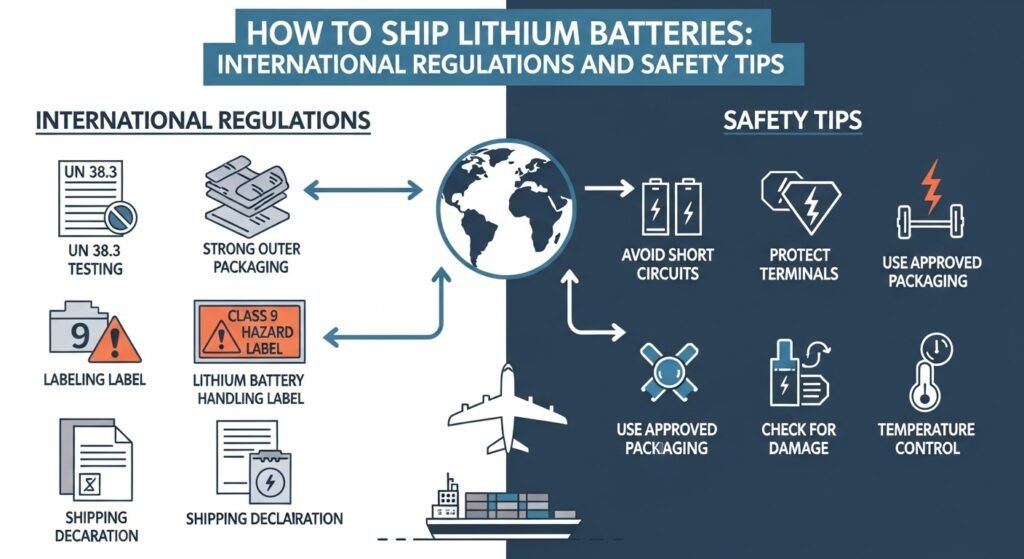
The global demand for electronics, electric vehicles, power tools, medical devices, and consumer gadgets has made shipping lithium batteries a critical part of international logistics. Whether it’s a smartphone battery, a power bank, or industrial energy storage, lithium batteries power modern life—but they also bring serious shipping challenges. Classified as dangerous goods, these batteries require strict compliance with international regulations, specialized labeling, and robust safety procedures.
For businesses involved in shipping lithium batteries internationally, understanding the regulatory landscape is not optional—it’s essential. One wrong declaration, missing label, or improper package can lead to shipment delays, heavy fines, or even catastrophic safety incidents. This comprehensive guide explains how lithium batteries are shipped globally, what rules apply, how labeling works, and the safest ways to move them across borders without risk or disruption.
Understanding Lithium Batteries and Why Shipping Them Is Regulated
Lithium batteries are divided into two main categories: lithium metal batteries and lithium-ion batteries. Lithium metal batteries are typically non-rechargeable and used in devices such as watches, cameras, and medical equipment. Lithium-ion batteries, on the other hand, are rechargeable and commonly found in laptops, smartphones, e-bikes, and electric vehicles.
The reason shipping lithium batteries is tightly regulated lies in their chemical nature. Lithium is highly reactive. If a battery is damaged, overcharged, improperly packed, or exposed to extreme heat, it can short-circuit, ignite, or even explode. These risks increase significantly during transportation, especially in air freight where pressure and temperature changes occur.
Several high-profile aviation incidents caused by battery fires have led regulators to impose strict global rules. Today, lithium batteries are considered hazardous materials, and their shipment is governed by international standards that every exporter, importer, and logistics provider must follow.
International Regulations Governing Shipping Lithium Batteries
IATA Regulations for Air Transport
The International Air Transport Association (IATA) sets the most stringent rules for . and lithium metal batteries by air. These regulations define how batteries must be packaged, labeled, documented, and declared.
Lithium-ion batteries are typically classified under UN3480 (batteries only) or UN3481 (batteries packed with or contained in equipment). Lithium metal batteries fall under UN3090 or UN3091. Each classification has unique packaging instructions and quantity limitations.
Air shipments often require batteries to be shipped at a reduced state of charge (usually no more than 30% for lithium-ion batteries), especially when shipped alone. This minimizes the risk of thermal runaway during flight.
IMDG Code for Sea Freight
For ocean transport, the International Maritime Dangerous Goods (IMDG) Code applies. Sea freight is generally more flexible than air freight, making it a preferred option for bulk shipping lithium metal batteries or large quantities of lithium-ion batteries.
While sea transport allows higher quantities, it still requires approved packaging, proper documentation, and compliant battery shipping label placement. Containers must be secured and protected from moisture, heat, and physical damage.
ADR and Other Regional Rules
In addition to global standards, regional regulations apply. Europe follows ADR for road transport, while the United States enforces Department of Transportation (DOT) and PHMSA rules. Any company involved in shipping lithium batteries internationally must ensure compliance not just at the origin but also at transit points and final destinations.
Packaging Standards for Shipping Lithium Batteries
Packaging is the first and most important line of defense in battery safety. International regulations require lithium batteries to be packed in a way that prevents short circuits, movement, and physical damage.
Each battery must be individually protected, often using non-conductive materials. Inner packaging must fully enclose the battery, while outer packaging must be rigid, durable, and tested to UN performance standards.
For example, shipments containing products such as the 4-pack efest 3000mah 18650 battery free shipping promotion still require full regulatory compliance despite the marketing phrase “free shipping.” The packaging and labeling requirements remain exactly the same, regardless of whether shipping is paid or free.
The Importance of Battery Shipping Labels
Correct labeling is non-negotiable when shipping lithium batteries. Labels communicate hazards clearly to carriers, customs authorities, and handlers throughout the logistics chain.
A lithium battery shipping label typically includes a battery handling symbol, a UN number, and emergency contact information. For lithium-ion batteries, a lithium ion battery shipping label or li ion battery shipping label must be used, depending on classification and transport mode.
Similarly, lithium metal battery shipping labels are mandatory for non-rechargeable batteries. In mixed shipments, a general battery shipping label may be required in addition to specific hazard labels.
Failure to apply the correct lithium metal battery shipping labels or lithium-ion markings is one of the most common causes of shipment rejection, fines, and delays at airports and ports.
Documentation Requirements for International Battery Shipments
Documentation plays a critical role in regulatory compliance. Most lithium battery shipments require a Shipper’s Declaration for Dangerous Goods, especially when transported by air. This document confirms that the batteries are packaged, labeled, and classified according to international standards.
Invoices, packing lists, and MSDS or UN38.3 test reports may also be required. Customs authorities increasingly scrutinize shipping lithium batteries internationally, and incomplete paperwork can halt shipments indefinitely.
Choosing the Right Transport Mode
Selecting the correct transport mode depends on shipment size, urgency, and battery type. Air freight is faster but heavily restricted and more expensive. Sea freight is slower but allows larger volumes and fewer limitations.
Road and rail transport may be suitable for regional distribution but still require adherence to safety and labeling regulations. Experienced logistics providers often combine multiple transport modes to optimize cost and compliance.
Role of Professional Logistics Providers
Navigating battery shipping regulations without expert support can be risky. Professional freight forwarders understand regulatory nuances, carrier requirements, and country-specific rules. They ensure shipments comply from origin to destination.
Companies like Adam Sourcing play a strategic role by coordinating documentation, packaging, and carrier approvals while reducing compliance risks. By leveraging industry expertise, businesses can focus on growth rather than regulatory headaches.
Adam Sourcing and End-to-End Battery Logistics
Adam Sourcing supports global trade by offering comprehensive logistics solutions that simplify complex shipments involving regulated goods like lithium batteries. Through its expertise in shipping china to usa, collaboration with a reliable shipping company in usa, and partnerships with an experienced shipping agent china to usa, the company ensures compliant movement of batteries and electronics. Its capabilities extend to air freight from china to usa, cost-efficient shipping from china to usa, and sourcing support through dropshipping suppliers usa and free dropshipping suppliers usa. With strong relationships among freight forwarding companies in china, Adam Sourcing helps clients access the cheapest shipping from china to usa while maintaining safety and compliance. The company also assists businesses seeking unique source products and services, works with the best freight forwarders china to usa, and advises on the best way to ship to china, making it a trusted partner for international battery logistics.
Common Challenges in Shipping Lithium Batteries
Despite regulations being well-documented, many businesses still struggle with compliance. One frequent issue is misclassification, where lithium-ion batteries are incorrectly declared as non-hazardous. Another common problem is outdated labeling, especially when rules change annually.
Cost is another challenge. Compliant packaging, documentation, and carrier surcharges increase shipping expenses. However, these costs are far lower than the financial and reputational damage caused by non-compliance.
Safety Tips for Shipping Lithium Batteries
Safety begins long before a shipment leaves the warehouse. Batteries should be inspected for damage, swelling, or leaks before packing. Defective or recalled batteries should never be shipped.
Temperature control is also essential. Batteries must be protected from extreme heat, and packaging should allow ventilation when required. Clear labeling ensures handlers know how to manage shipments safely throughout transit.
Training staff involved in shipping lithium batteries is equally important. Everyone from warehouse workers to documentation teams must understand compliance requirements to prevent costly errors.
Final Thoughts
As global trade continues to expand, shipping lithium batteries will remain a critical logistics challenge. The combination of regulatory complexity, safety risks, and rising demand makes compliance more important than ever. Businesses that invest in proper packaging, accurate labeling, and expert logistics support can ship confidently while avoiding costly disruptions.
Whether you’re moving small consumer batteries or large industrial shipments, understanding international regulations and applying proven safety practices is the key to long-term success in lithium battery logistics.
FAQs: Shipping Lithium Batteries
How to ship lithium batteries?
To ship lithium batteries, you must correctly classify the battery type, use UN-approved packaging, apply the appropriate battery shipping label, prepare accurate documentation, and comply with carrier and destination regulations. Professional freight forwarders can simplify this process.
How to ship lithium ion batteries?
Shipping lithium ion batteries requires compliance with IATA, IMDG, or regional rules depending on transport mode. Batteries must be packed to prevent short circuits, labeled correctly, and often shipped at reduced charge levels.
Can you ship batteries USPS?
Yes, but with restrictions. USPS allows limited shipment of certain lithium batteries, primarily within the United States, and specific packaging and labeling rules apply.
Can you ship lithium batteries?
Yes, lithium batteries can be shipped legally if all safety, packaging, labeling, and documentation requirements are met. Non-compliance can result in penalties or shipment rejection.
Can you ship lithium batteries USPS?
USPS permits lithium battery shipments under strict conditions, mainly for domestic shipments. International lithium battery shipping through USPS is highly restricted.